


05 Mar Business Inkjet Printers vs Laser: 3 Myths Debunked
Business Inkjet Printers vs Laser
For many years, the office printing market shaped how businesses think about printer technology. Laser printers were widely seen as the professional standard for office environments, while inkjet printers were often associated with home use or small desktop devices.
However, that perception is largely based on older inkjet technology that was not designed for modern workplace demands.
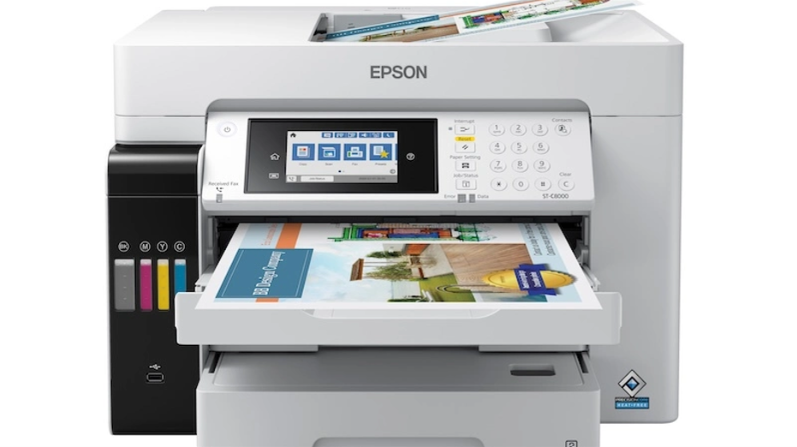
Today’s business inkjet printers vs laser have evolved significantly. Modern systems are built for high-volume office environments and are designed to compete directly with laser devices in terms of speed, reliability, and professional output. Improvements in printhead technology, energy efficiency, and internal hardware design have allowed inkjet systems to become a viable solution for many organizations.
Innovations such as PrecisionCore Heat-Free® technology developed by Epson have transformed what modern business inkjet printers for offices can deliver in workplace environments. These systems eliminate the heating process required by laser printers, helping reduce energy consumption while simplifying internal mechanical components.
According to Epson’s overview of PrecisionCore Heat-Free printing technology, the process eliminates the need for heat in the ink ejection process, which reduces energy consumption and allows printers to start printing immediately without warm-up time.
As organizations increasingly evaluate their printing infrastructure based on efficiency, reliability, and total operating cost, many are discovering that modern business inkjet printers provide advantages that traditional laser printers cannot always match.
Let’s look at three common myths about business inkjet printing — and why they no longer hold true.
Myth #1: Business Inkjet Printers Are More Expensive Than Laser
One of the most common assumptions is that inkjet printers cost more to operate than laser printers. This belief typically focuses only on the price of ink cartridges compared with toner cartridges.
However, when evaluating office printing technology, the true cost of ownership goes far beyond consumables. Businesses should also consider operational factors such as:
• Energy consumption
• Maintenance parts
• Service visits
• Printer downtime
• Replacement components
Traditional laser printers rely on heat to fuse toner onto paper, using multiple mechanical components like fusers, transfer belts, and imaging drums. Over time, these parts wear out, increasing maintenance costs and causing service interruptions.
Modern business inkjet printers vs laser, especially those with Epson PrecisionCore technology, use a Heat-Free printing process. Without heating elements, they consume less electricity and have fewer components subject to mechanical wear.
This approach helps businesses lower maintenance and energy costs. Many organizations now compare business inkjet printers vs laser based on overall efficiency and long-term operating expenses rather than just cartridge prices.
For many businesses evaluating modern office hardware, comparing business printing systems helps highlight how newer technologies can reduce operational complexity while improving efficiency.
Myth #2: Inkjet Printers Are Too Slow for Office Use
Another long-standing myth is that inkjet printers are too slow to support busy office environments.
This perception largely comes from older desktop inkjet models that were designed for occasional home printing rather than high-volume office workloads. Those early devices often had slower print speeds and limited durability.
Today’s business inkjet printers are engineered very differently.
Modern systems are designed specifically for workgroups and enterprise environments that require reliable, high-volume printing throughout the day. Devices like the Epson AM-C4000 business inkjet printer are built to support demanding office environments with fast print speeds and consistent output.
One key advantage of many business inkjet systems is that they do not require warm-up time before printing begins. Laser printers must heat their internal fuser units before producing the first page.
Because business inkjet printers use Heat-Free printing technology, they can begin printing almost immediately. This allows for:
• Faster first-page output
• Consistent print speeds across larger jobs
• Reduced waiting time for employees
For organizations that regularly print documents such as reports, invoices, presentations, or internal communications, eliminating warm-up delays can improve workflow efficiency.
In many modern offices, business inkjet printers now deliver speeds comparable to laser systems, making them a practical choice for professional environments.
Myth #3: Inkjet Printing Doesn’t Produce Professional Quality
In the past, some businesses believed that inkjet printers could not match the professional print quality produced by laser printers.
While that perception may have been true years ago, modern business inkjet printers have significantly improved in print quality and consistency.
Today’s systems are capable of producing high-quality output suitable for a wide range of professional documents. Modern business inkjet printers can deliver:
• Crisp black text for reports, invoices, and contracts
• Smooth gradients for charts and presentations
• Consistent, vibrant color output for marketing materials
PrecisionCore printheads used in many Epson business inkjet systems are engineered for accuracy and durability. This technology allows printers to maintain consistent ink placement even during high-volume printing tasks.
For many organizations, this means business inkjet printers can now handle both internal office documents and customer-facing materials without compromising quality.
Business Inkjet printers vs Laser: The Conversation Has Changed
For many years, organizations evaluated printer technology primarily by asking a simple question:
Inkjet or laser?
Today, however, businesses are making printing decisions based on a wider range of operational considerations, including:
• Energy efficiency
• Reduced maintenance complexity
• Operational uptime
• Total cost of ownership
• Workflow integration
Modern business inkjet printers address many of these priorities through simplified mechanical design and lower energy consumption.
As sustainability initiatives and cost-efficiency goals become more important for organizations, technologies such as Heat-Free printing are becoming increasingly attractive alternatives to traditional laser systems.
Is It Time to Reevaluate Your Office Printing Environment?
If your organization has not reviewed inkjet technology in recent years, it may be worth taking another look.
Advances in business inkjet printers vs laser have changed the way many companies approach office printing. Modern systems can offer advantages such as:
• Lower energy usage
• Fewer replacement parts
• Reliable high-volume printing
• Professional-quality output
Blue Print Service provides professional office printing equipment and business inkjet solutions designed for a wide range of environments, from small office desktops to high-capacity enterprise workgroups.
If you are currently evaluating copier upgrades or planning a print infrastructure refresh, comparing modern business inkjet printers with traditional laser systems may reveal new opportunities to improve efficiency and reduce operational costs.
Organizations interested in upgrading their equipment can also request a printer quote to explore business inkjet solutions tailored to their office needs.
Conclusion: Why Businesses Are Reconsidering Inkjet Technology
Many old perceptions about office printing are outdated. Comparing business inkjet printers vs laser shows modern inkjets now match or exceed lasers in speed, efficiency, reliability, and print quality. Technologies like PrecisionCore Heat-Free printing reduce energy use and simplify mechanics, making high-volume printing more cost-effective. Businesses upgrading their office printers can find that understanding business inkjet printers vs laser helps improve efficiency, lower costs, and boost productivity.
Frequently Asked Questions About Business Inkjet Printers
- Are business inkjet printers good for office environments?
Yes. Modern business inkjet printers are designed specifically for office use and can handle high print volumes. Many organizations rely on them for reports, internal documents, and presentations.
- What is the difference between inkjet and laser printers?
Laser printers use heat to fuse toner onto paper, while inkjet printers spray microscopic droplets of ink. Many modern business inkjet printers use heat-free technology that reduces energy usage.
- Are business inkjet printers more energy efficient?
Yes. Because many modern inkjet systems do not require heating elements, they typically consume less electricity than traditional laser printers during operation.
- Do business inkjet printers require less maintenance?
In many cases, yes. Business inkjet printers often have fewer mechanical components compared to laser printers, which can reduce replacement parts and service visits.
- Should businesses choose inkjet or laser printers?
The best choice depends on factors such as print volume, energy efficiency goals, and long-term operating costs. Many businesses now compare inkjet vs laser printers based on total cost of ownership.
Sorry, the comment form is closed at this time.